Single-family vs Condo vs Multi-family vs Townhouse vs ADU: Knowing these differences in 2026
It’s been over 5 years since I’d first written about the differences between a single-family home, multi-family home, condo and townhouse. I remember the snippets of time spent writing it - mostly on the deck of my Boxborough apartment, old me was out to get some sun.
That article was the first to make it to the first page of a Google search (still does), which in turn gave me confidence in my SEO abilities. It occupies a special place in my heart.
So much has changed since. I’ve moved to Littleton, lived through life without a kitchen, started a relocation-focused blog and perhaps most meaningfully, helped a client sell family land so that she could settle into her last chapter in life. My writer’s voice has also evolved.
What prompted me to revisit this topic was the change in Massachusetts law that encourages Adjacent Dwelling Units (ADUs) to be constructed. Whereas ADUs had before required a special permit and could only be occupied by a family member, they are now permitted “by-right” and without the need for familial relations. As I’m writing this today, the adoption of ADUs has been slow, but make no mistake - this is game-changing for Boston and Greater Boston. Just take a look at California: ADUs are 1 in every 5 new homes in the state.
Read on for my 2026 version of “what is the difference between a single-family, multi-family, condo and townhouse”, now with ADUs incorporated.
May you understand the distinction between ownership boundaries and architecture style at the end of this.
How many types of residential real estate categories are there?
There are 5 distinct categories of residential real estate: single-family homes, multi-family homes, condominiums (condo), co-operatives (co-op) and mobile homes.
For most buyers looking to purchase a home in Boston or Greater Boston, the type of housing will either be a single-family home, multi-family home or condominium. As such, I will not be delving into co-ops and mobile homes.
What is a Single-Family home?
A property that is advertised as a “single-family home” is not a statement of how the structure looks, though it generally appears like a standalone house:
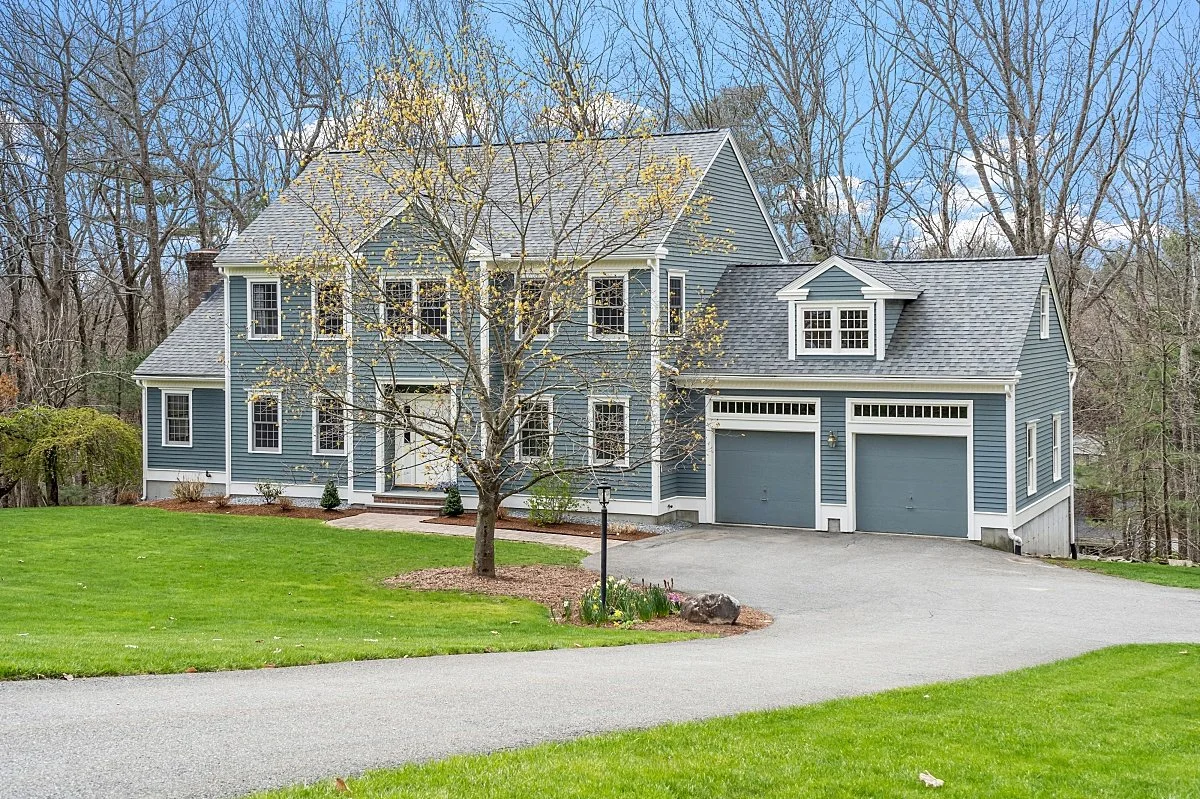
140 Patch Hill Rd in Boxborough that I’d sold is a classic example of a New England-style single-family Colonial home.
The defining feature of a single-family home is that the owner owns the land that the structure sits on, and the property is fitted with amenities suitable for 1 family to reside in (whether or not the owners have extended family/friends living with them is besides the point).
Land ownership, is often reason why single-families – or for that matter, multi-families – appreciate at a greater rate than condos.
The property deed would usually read: "A certain parcel of land with the buildings thereon, bounded and described as follows…".
Single-family homes can be:
Detached: The building stands alone
Attached: The building shares a wall with another property (less common, which is why they’re sometimes mistaken for condos)
Part of a Homeowner’s Association (HOA)! Note that it remains a single-family, and not a condo.
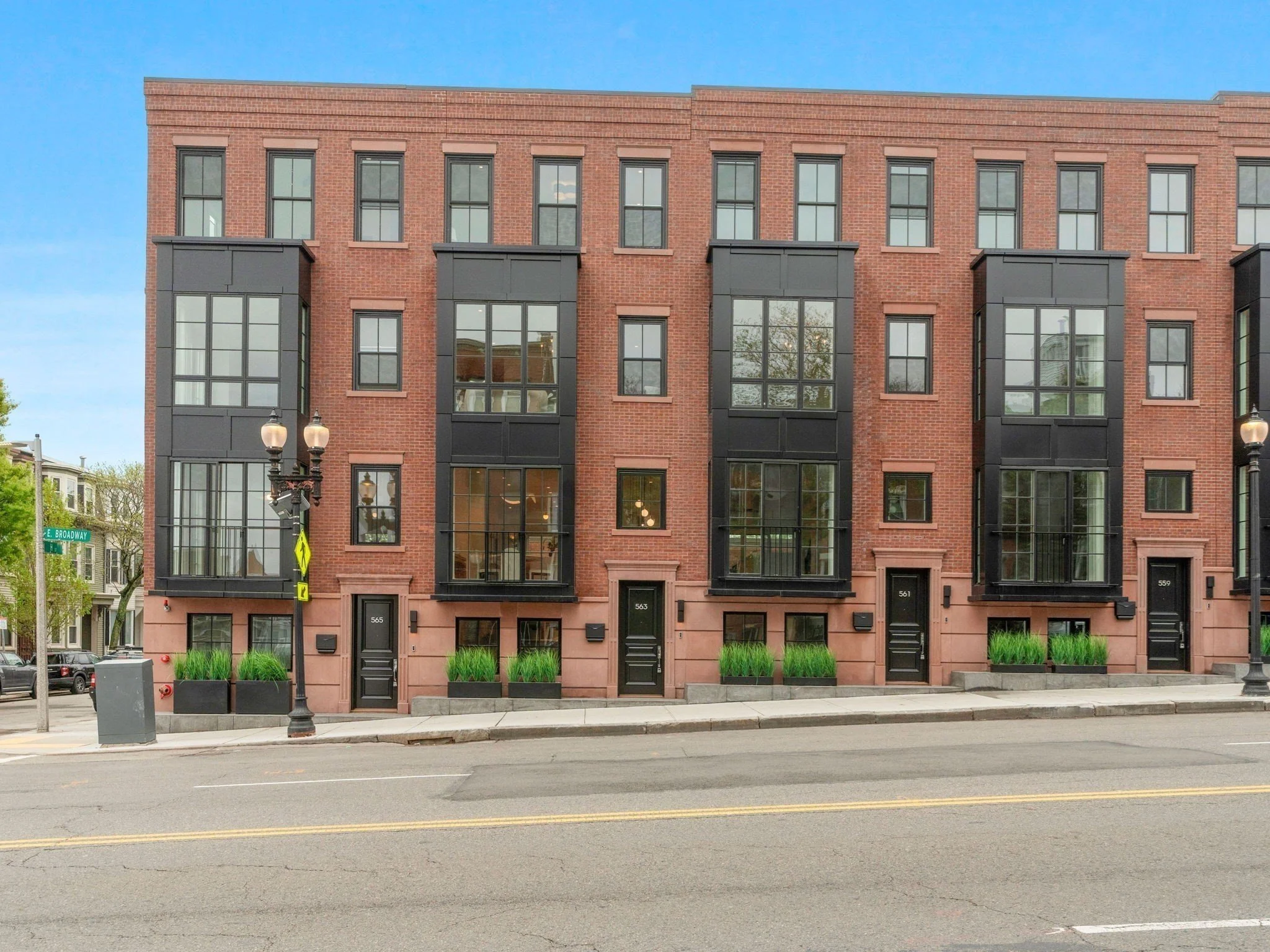
Attached single-family homes like these are commonly assumed to be condominiums due to homogeneity in design. Case in point that visual cues can be misleading. Photo credit: Andrea Arcari.
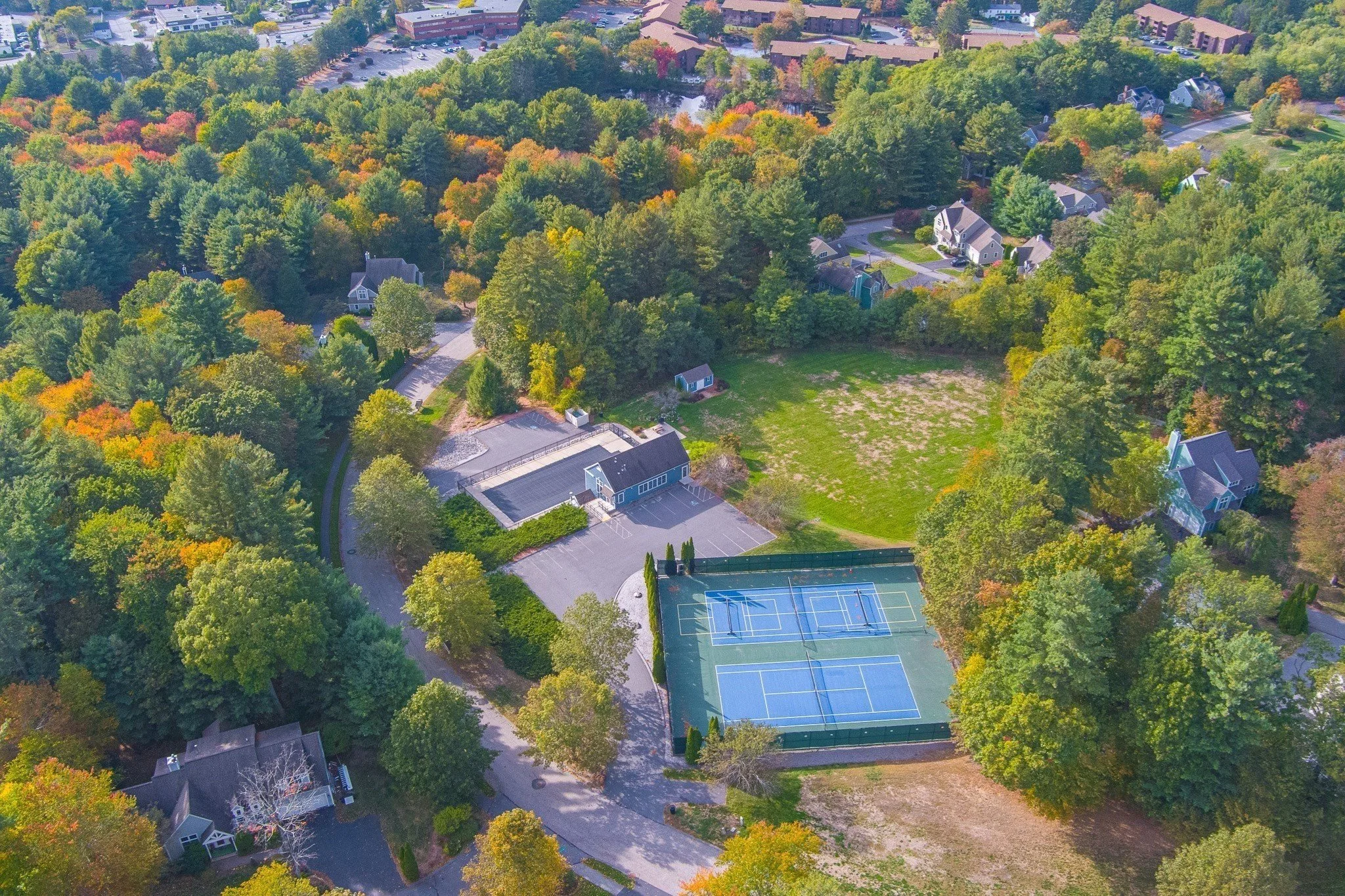
Single-family homes that share amenities like tennis courts, club house and pool are often part of a Homeowner’s Association (HOA) that requires monthly HOA contributions. Seeing an HOA tagged to a property’s listing does not imply that it’s a condo. Photo credit: Ling Huang.
As of February 2, 2025, Massachusetts law (Section 8, Chapter 150 of the Acts of 2024 part of the Affordable Homes Act) allows Accessory Dwelling Units (ADUs) "by-right". Having an ADUs does not convert a single-family into a multi-family property. More on that below.
What is a Multi-Family Home?
One of my earliest “aha” moments in buyer education came from a client who told me she was looking for a “split home.” “Why split?”, I asked. Split-level homes were popular in the ’50s, but an uncommon request these days. “Oh, so I could live on one side and rent out the other,” she explained. That’s when it clicked- she was not looking for a split-level home, she was looking for two-family property.
The defining feature of a multi-family home is that the owner owns the land that the structure sits on, and the property consists of two or more legally separate living units within one larger structure. Each unit has its own kitchen, bathroom and living space. A multi-family property exists as a 2-family, 3-family, 4-family… the list goes on.
It is important to know that legal separation matters. Adding a kitchen in the basement of a house does not qualify as owning a 2-family property (it qualifies as an illegal renovation though!). Zoning bylaws and building permits must confirm approval of utility, or the added features may need to be removed if discovered.
Multi-families can often be spotted from on their design - there’s a certain symmetry or division that is telling of the number of units in the property:
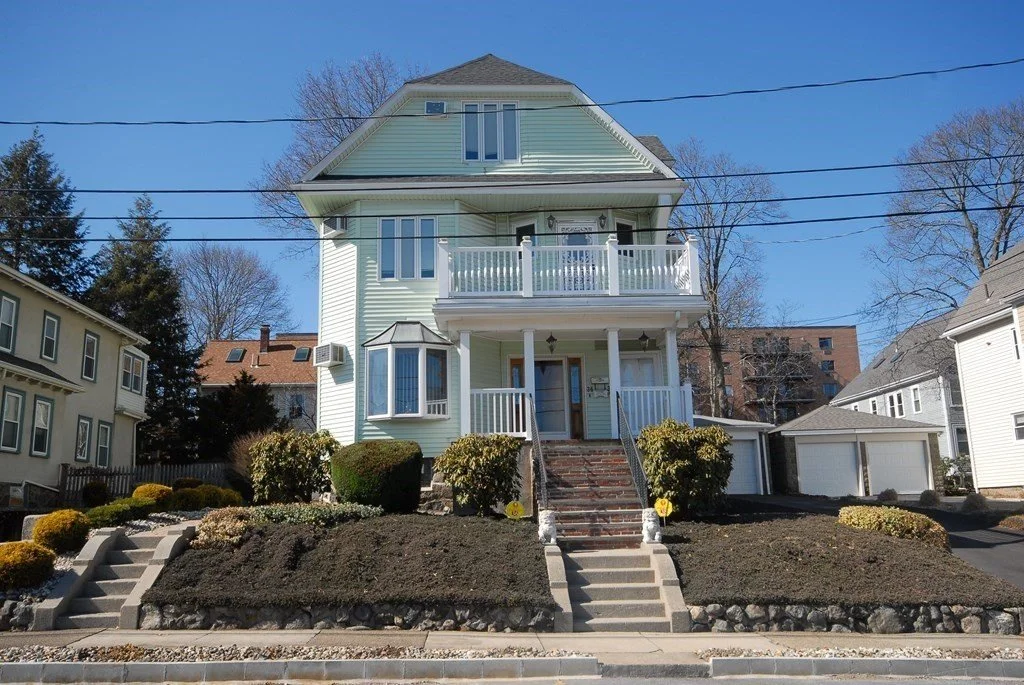
Example of a 2-family home with hints of symmetry between the top and bottom unit. Photo credit: Steve McKenna & The Home Advantage Team.
Multi-family homes can be:
Detached: The building stands alone
Attached: The building shares a wall with another property
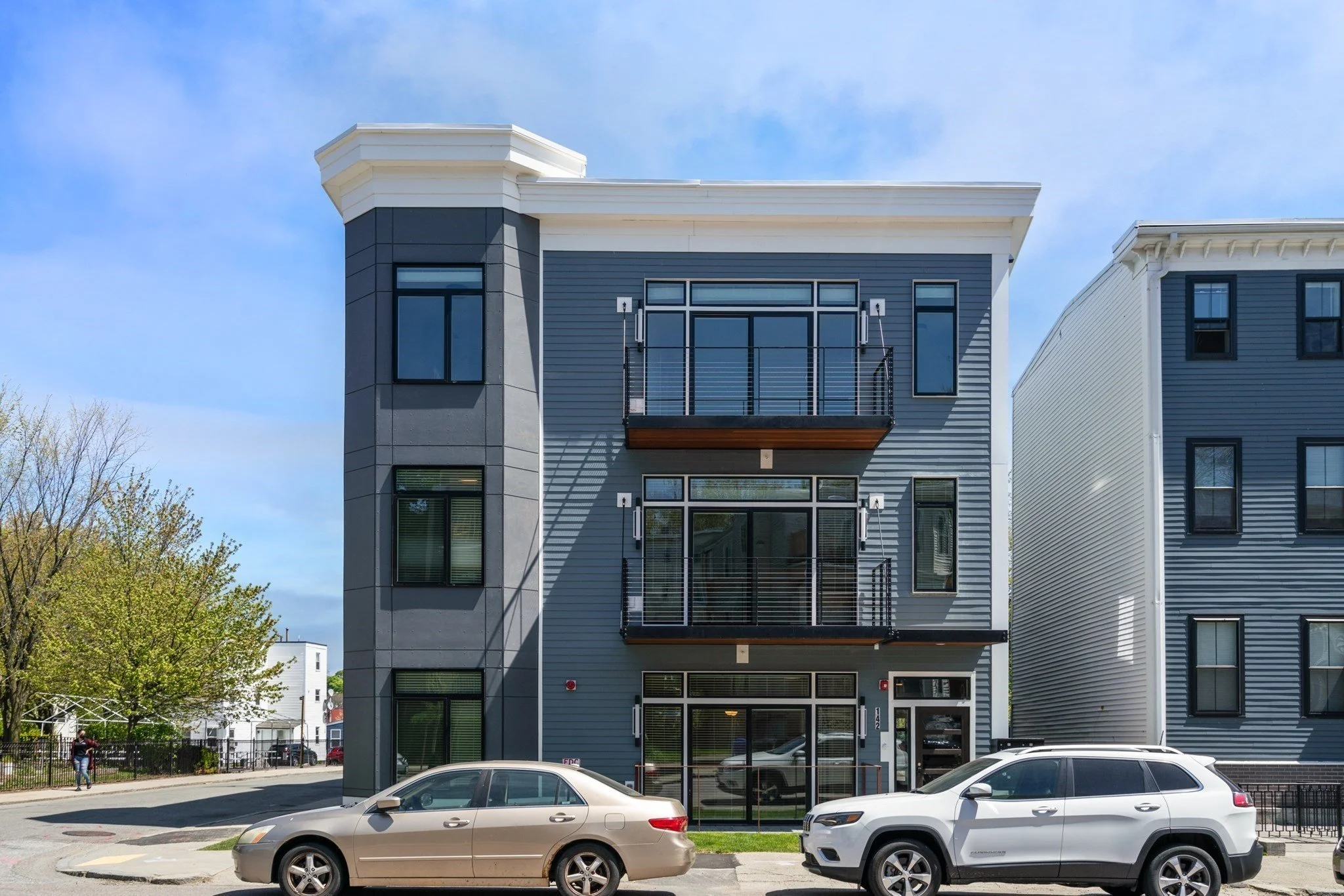
A modern 3-family detached property with beautiful symmetry like this is rare to see! Photo credit: Tayler Barbella.
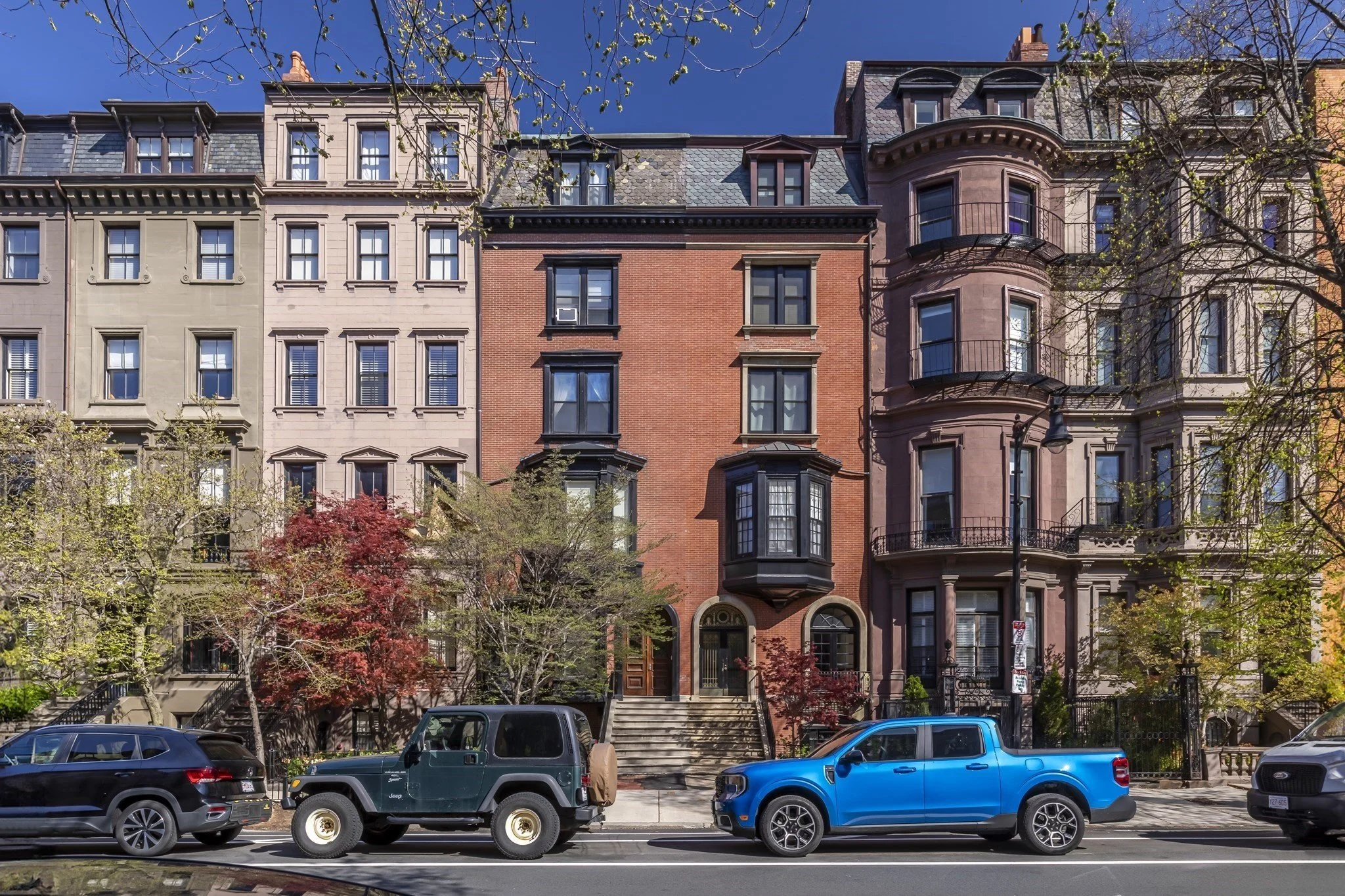
Attached multi-family property. Architectural masterpieces like these can be seen in the Back Bay neighborhood of Boston. Photo credit: Sarah Glovsky.
That said, a building that looks like a multi-family property could in fact be already converted to house a number of condominium units- there is no way to confirm by simply looking. The only way to be sure is to look up the recorded deed. Like a single-family, the deed to a multi-family would read “A certain parcel of land with the buildings thereon, bounded and described as follows…"
What is a Condominium (Condo)?
The Condominium category is often where people get the most confused, because condos appear in forms that look like a single-family or multi-family. Condo ownership could exist as one of 80 units in a high-rise building (what most people think of when they think “condo”), one of 2 attached structures, or even a standalone house!
The defining feature of a condominium ownership is that there is ownership of a structure, but not land.
For the majority, condominium ownership consists of owning the inside of the unit (a simplified explanation is to imagine a clear cube filled with water; you own only the space where the water touches). Everything outside of the unit’s walls - yard, hallway, siding, roof, structural elements... including land - is owned collectively with the other unit owners.
A condo deed would read like “Owner of the UNIT described above in (name of condominium) created by Master Deed dated...”.
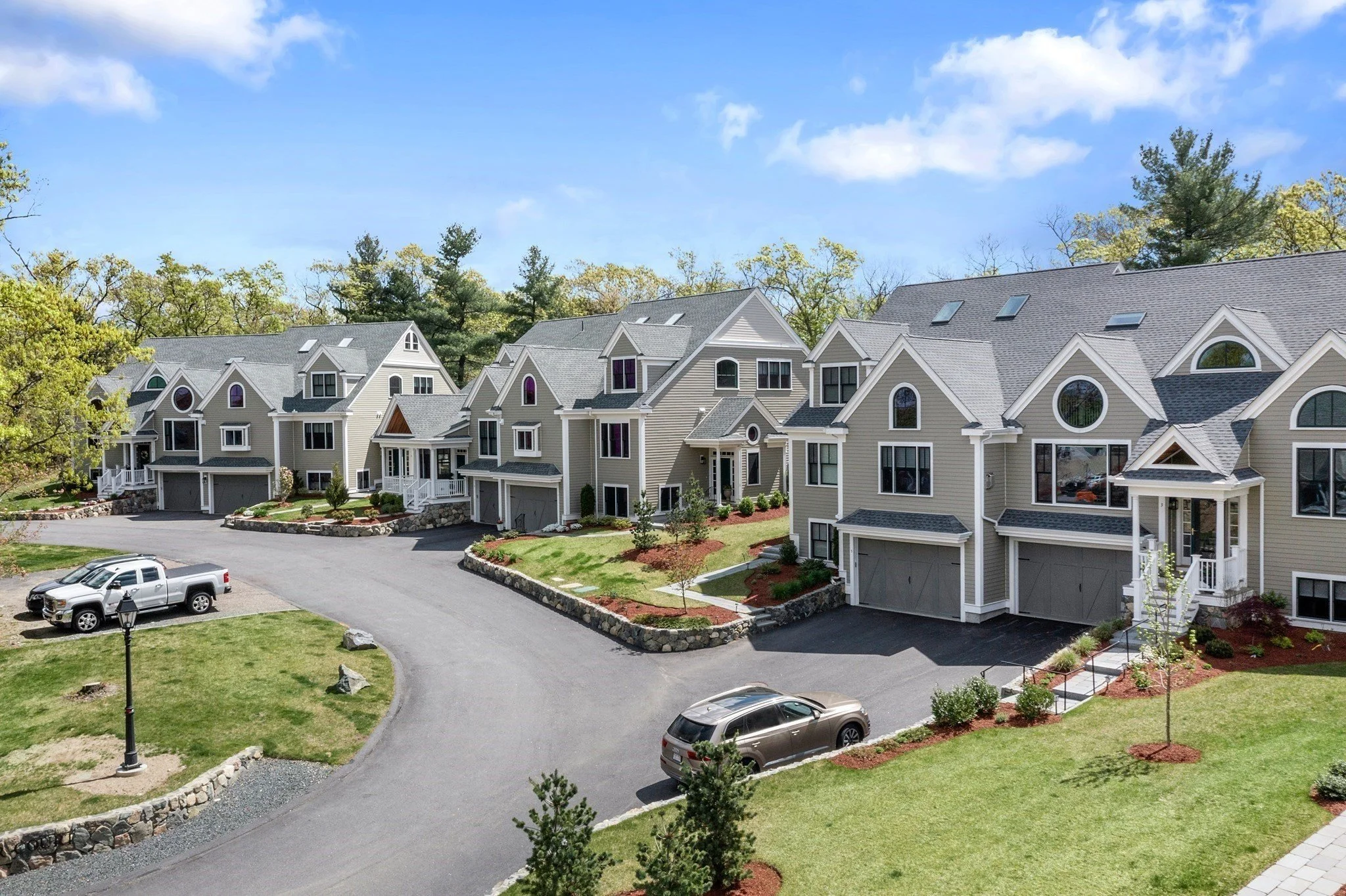
Condos are easy to recognize when they’re part of a planned development and have a homogenous look. You’ll see shared spaces like parking lots, lawns, gardens, or amenities such as a gym, pool, or tennis court.
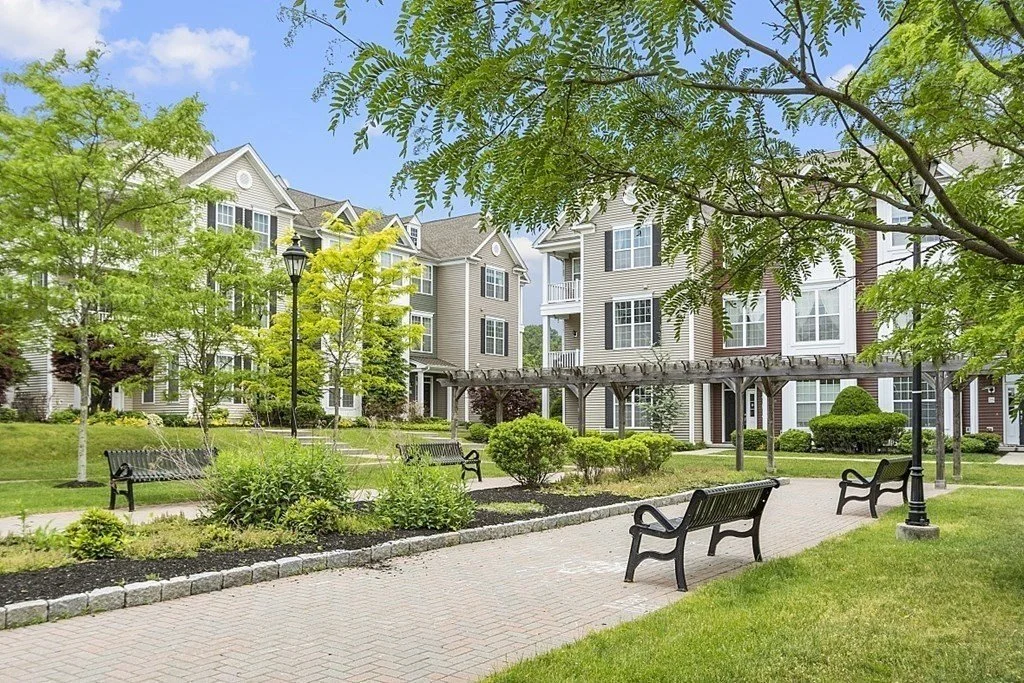
37 Moses Wheelock Ln in Westborough is a classic planned development: communal green space, deliberate landscaping and homogeneous exteriors.
They become trickier to identify when they’re created by converting a multi-family property into condo units, when it’s a detached standalone structure, or when a building (e.g. church, school) has been repurposed.
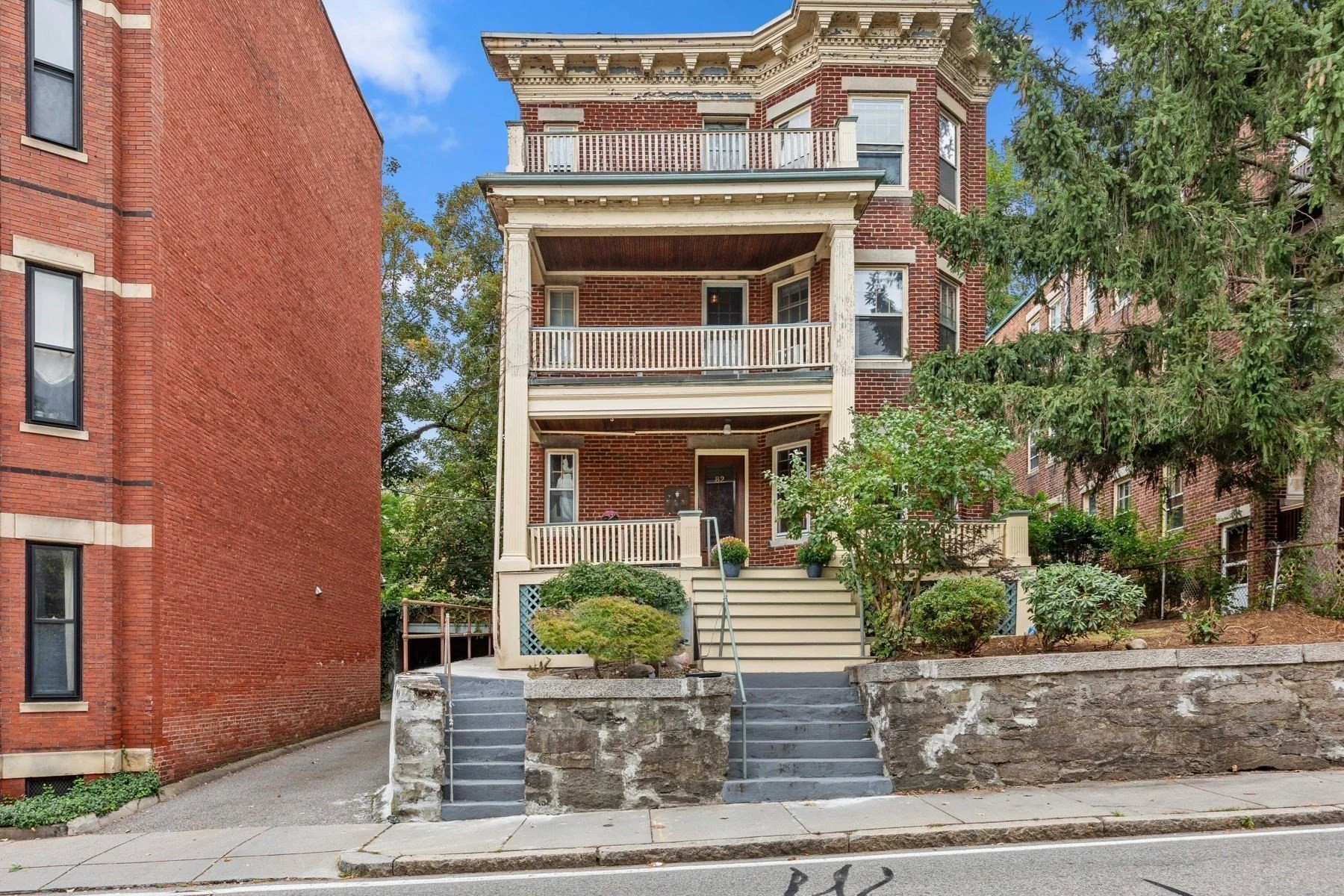
82 Walnut St in Brookline that I’d sold is a triple-decker house that once existed as a 3-family, but later converted into 3 condo units.
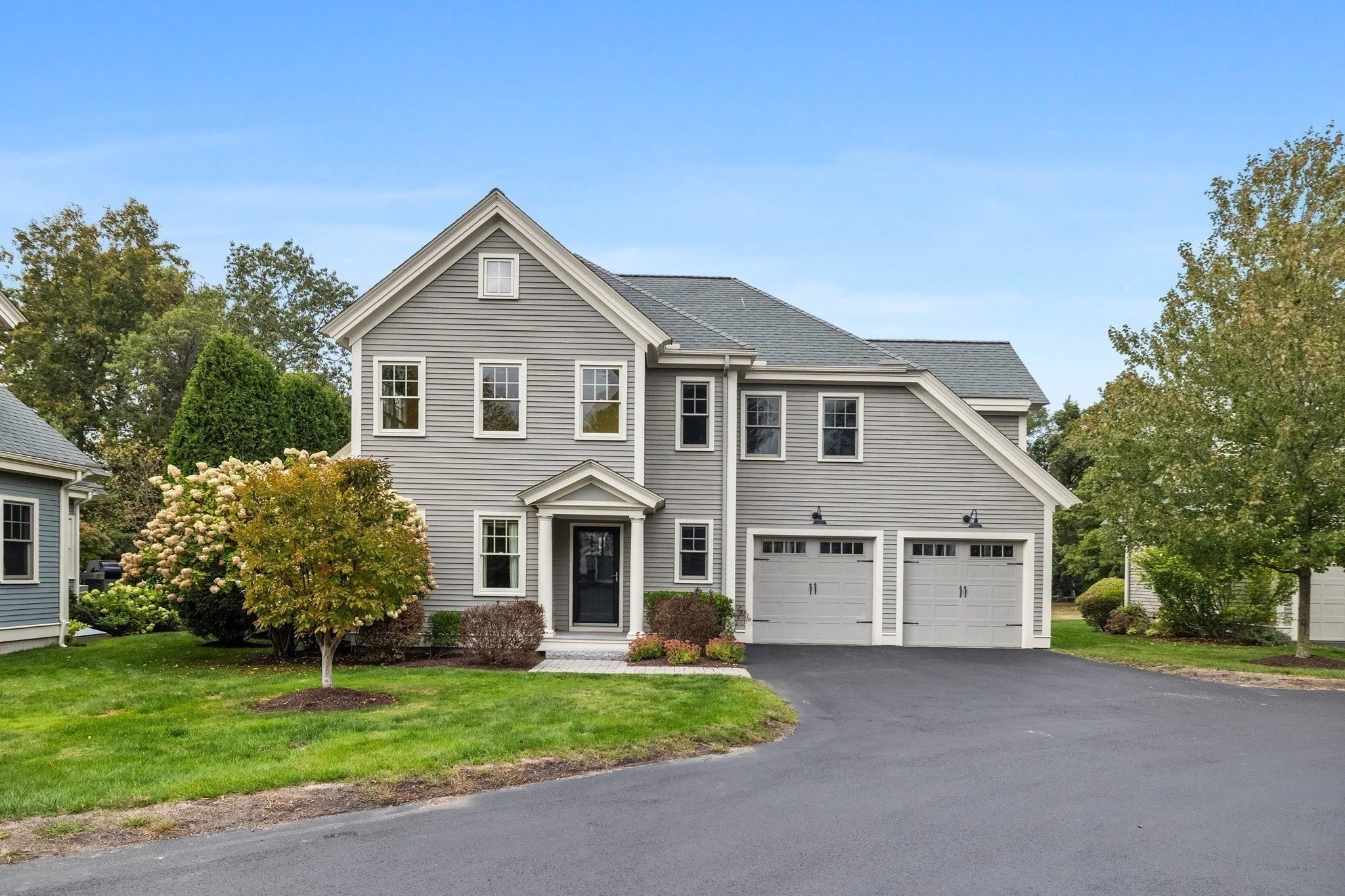
This standalone house looks like a single-family, but is part of a condominium. Photo credit: The Joyce Team.
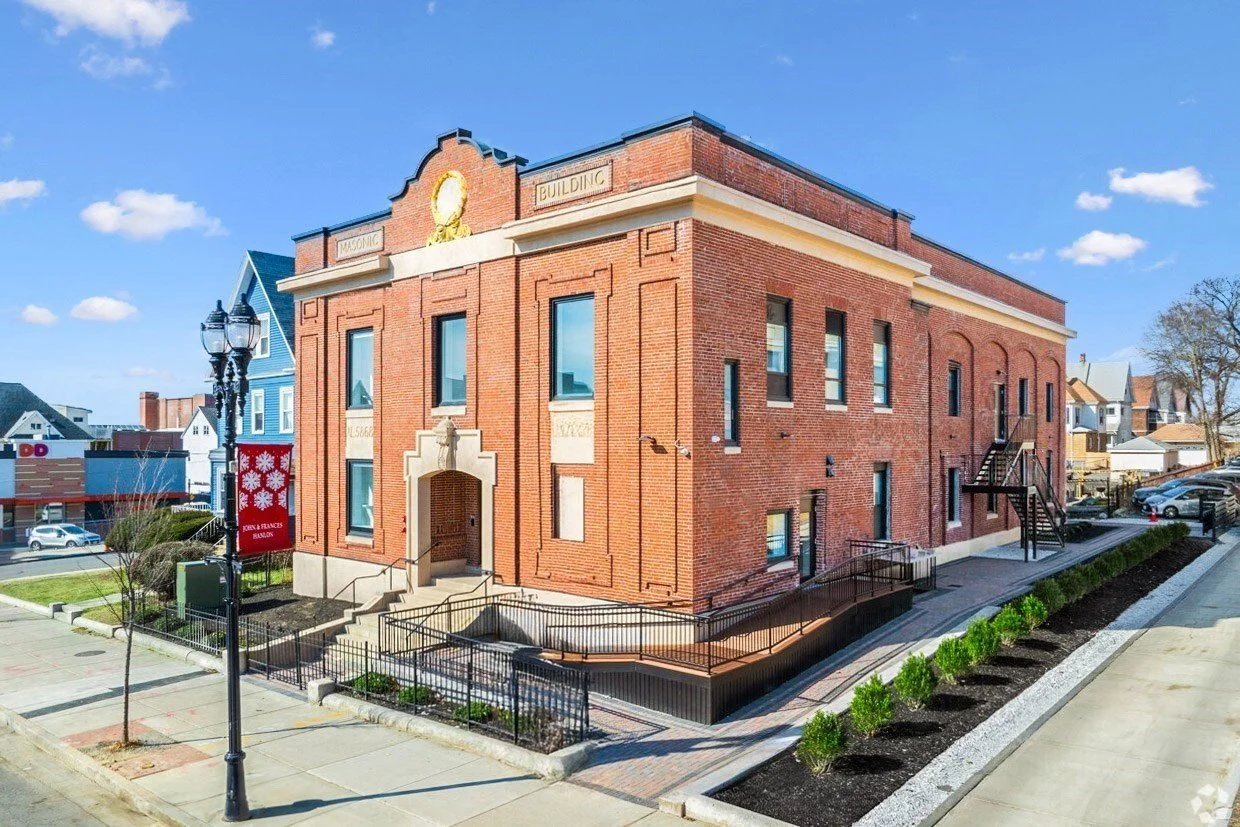
This was former masonic building that has been repurposed into a condominium building. Historical buildings like these are rare and undoubtedly cool! Photo credit: Melody Golestani.
The conversion of a multi-family property to condominium units is easy and often lucrative because the resulting condo units are often sold at a higher $/sqf. A condo conversion is essentially creating:
Physical separation of utilities, entrance and egress;
Legal separation of ownership from one to two (or more) owners. An experienced real estate attorney would be able to take care of the legal paperwork: Master Deed, Declaration of Trust, By-laws etc.
What about Townhouses, Rowhouses and Duplexes?
Apartments, Townhouses, Rowhouses and Duplexes are descriptions of an architectural style, not ownership structure.
Townhouse
“Townhouse” is most often used to loosely mean “condo”. While townhouses do – and often – exist as condos, the fact remains that townhouses are a description of architectural design:
A townhouse is defined as an attached dwelling unit which is a part of and adjacent to other similar dwelling units that are connected to, but separated from one another by a common party wall having no doors, windows, or other provisions for human passage or visibility.
Remember, a property exists as a condo only if there is no deeded ownership of land. You could have a townhouse and own the land that your property sits on- you’d own a single-family townhouse. Otherwise, you’d have a townhouse condo!
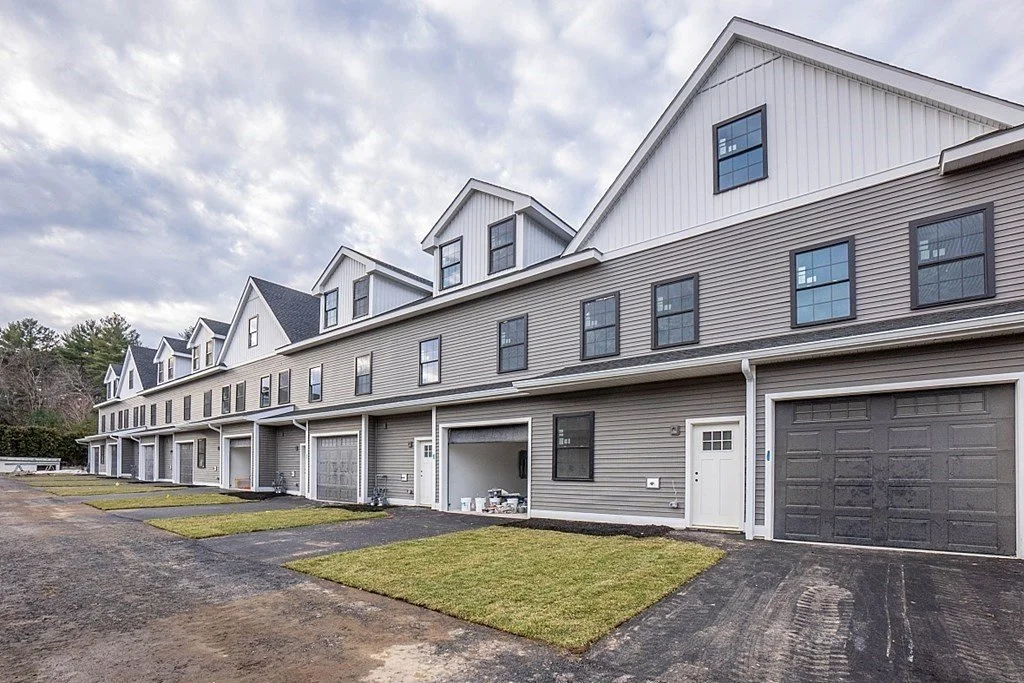
The Village at Bedford Woods was a 26-unit townhouse condominium that I’d sold between 2021-2023.
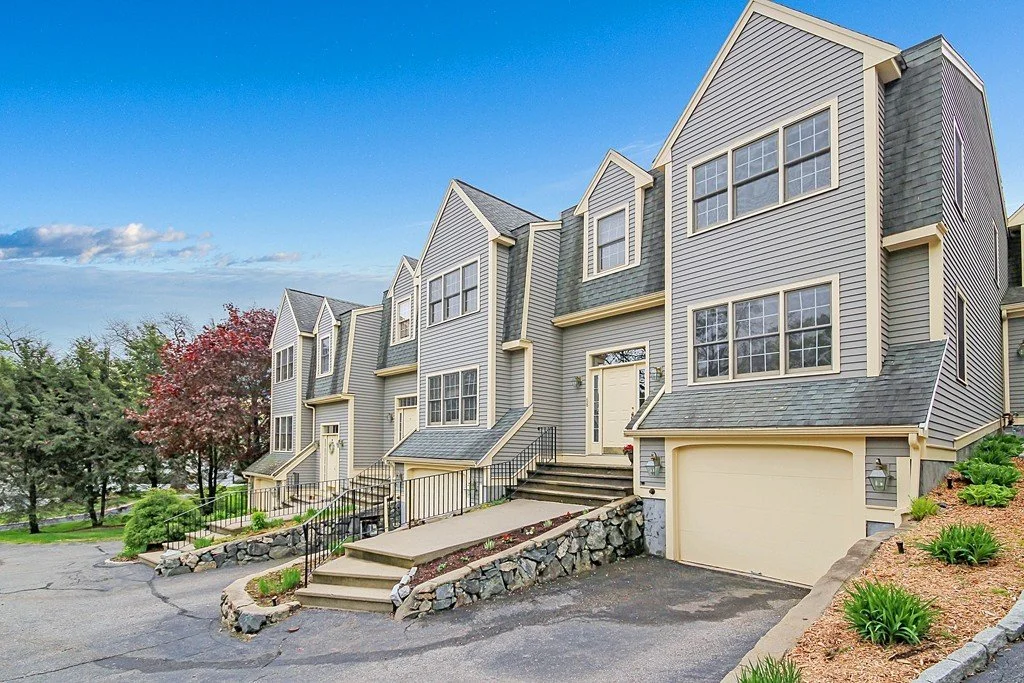
Townhouse. Photo credit: The Madden Team.
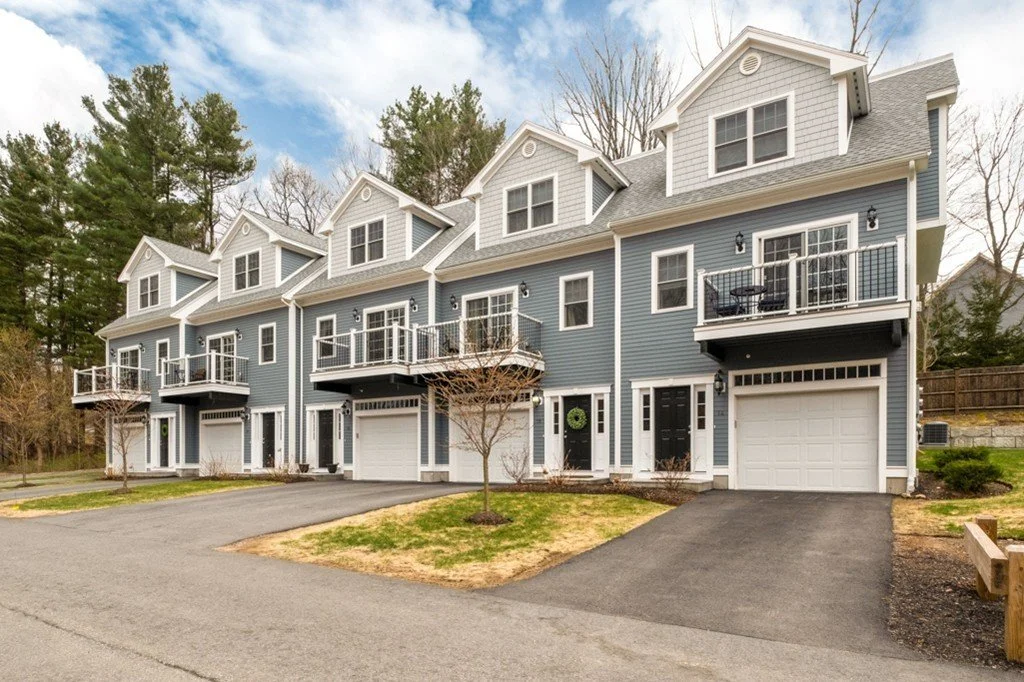
Townhouse. Photo credit: Anthony DiCesare.
Rowhouse
A rowhouse is very similar to a townhouse, except arranged in a continuous row along a street.
Just like townhouses, rowhouses describe the design, not the ownership. A rowhouse can exist as a condo, a single-family home, or even a multi-family property.
In dense cities like San Francisco, you’ll even find rowhouses that are legally set up as multi-family buildings - another reminder that what a property looks like doesn’t always tell the full story.
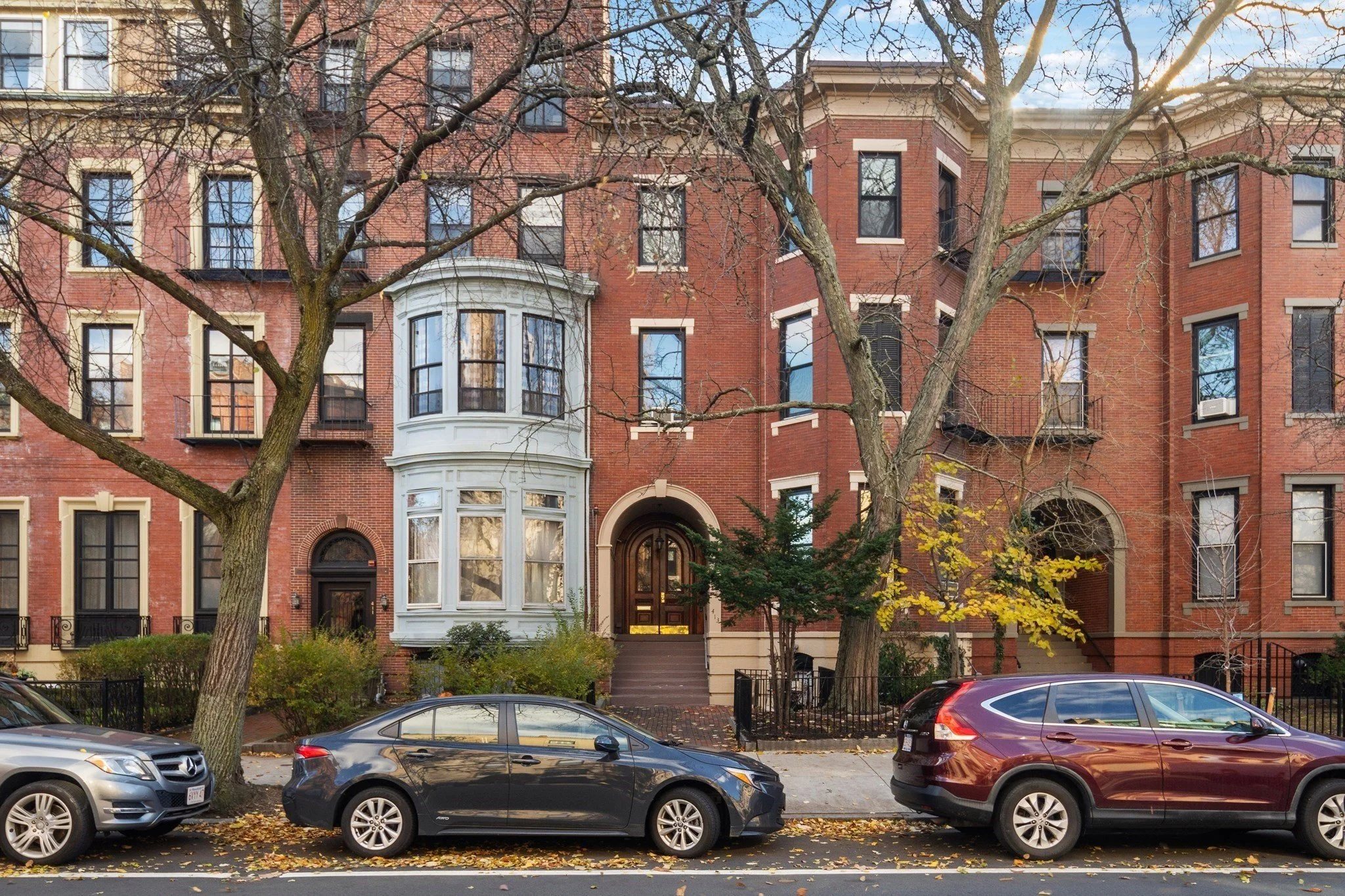
Rowhouses are a common sight in the Back Bay neighborhood of Boston. Photo credit: Rob Ramsdell.
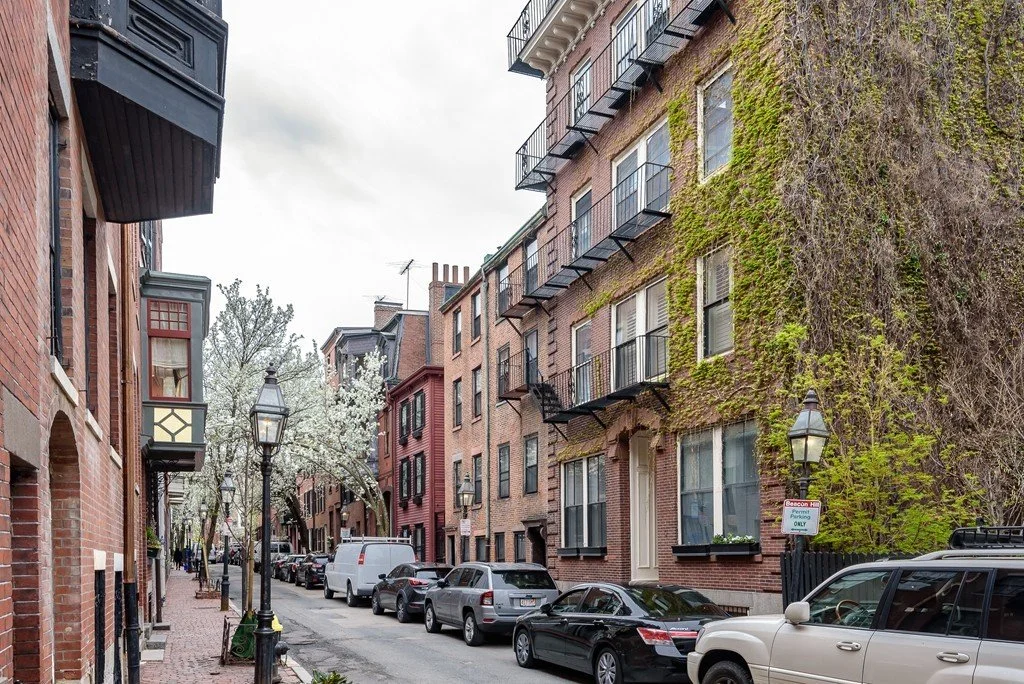
Photo credit: Bernadine Tsung Megason.
Duplex
A duplex as a style of housing is pretty self-explanatory. The word itself means "twofold" or "double", so expect two units within one structure. Duplexes could exist as units placed top and bottom, front and back, or side-by-side.
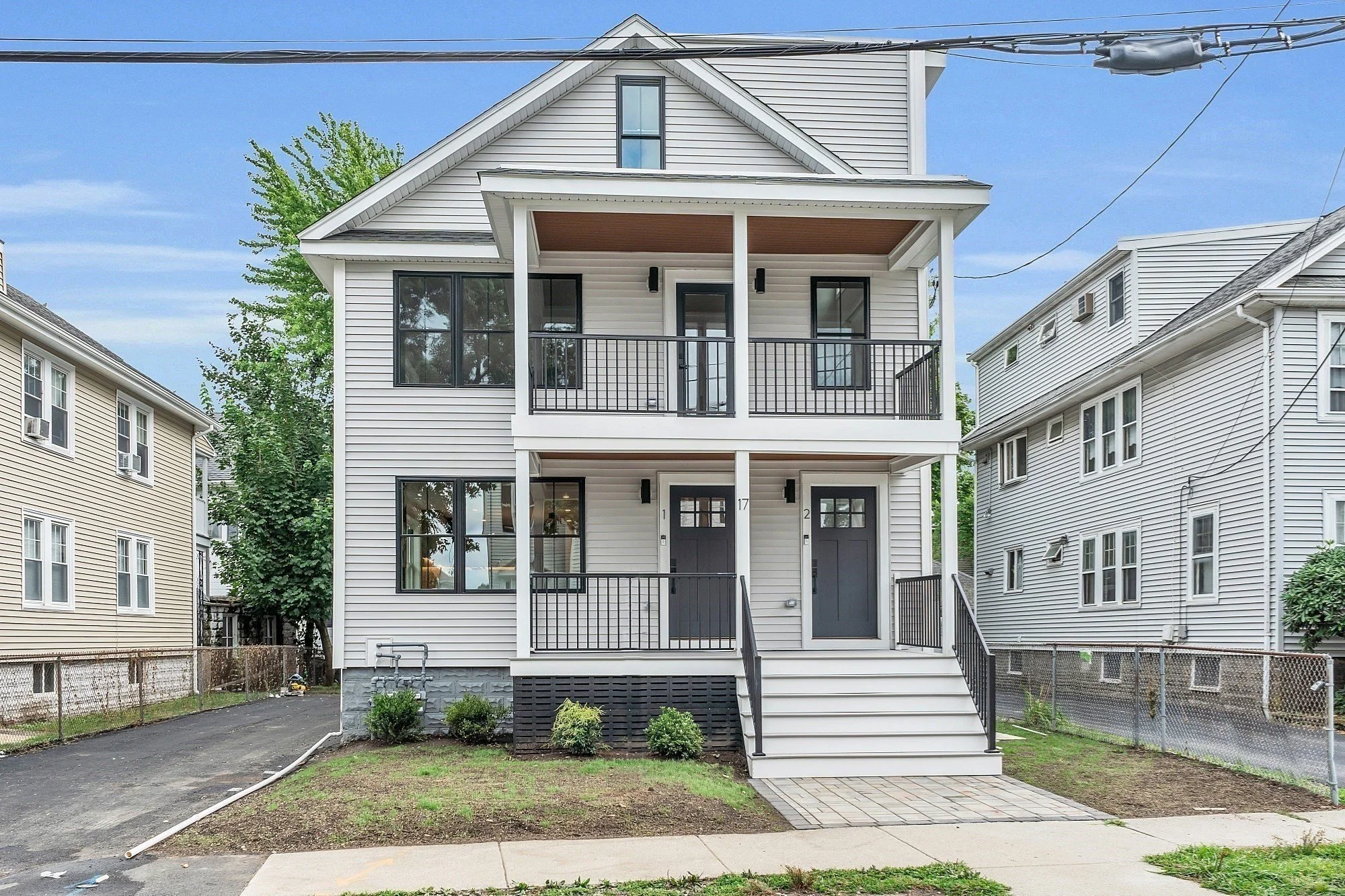
Top and bottom duplex in Medford that I’d sold.
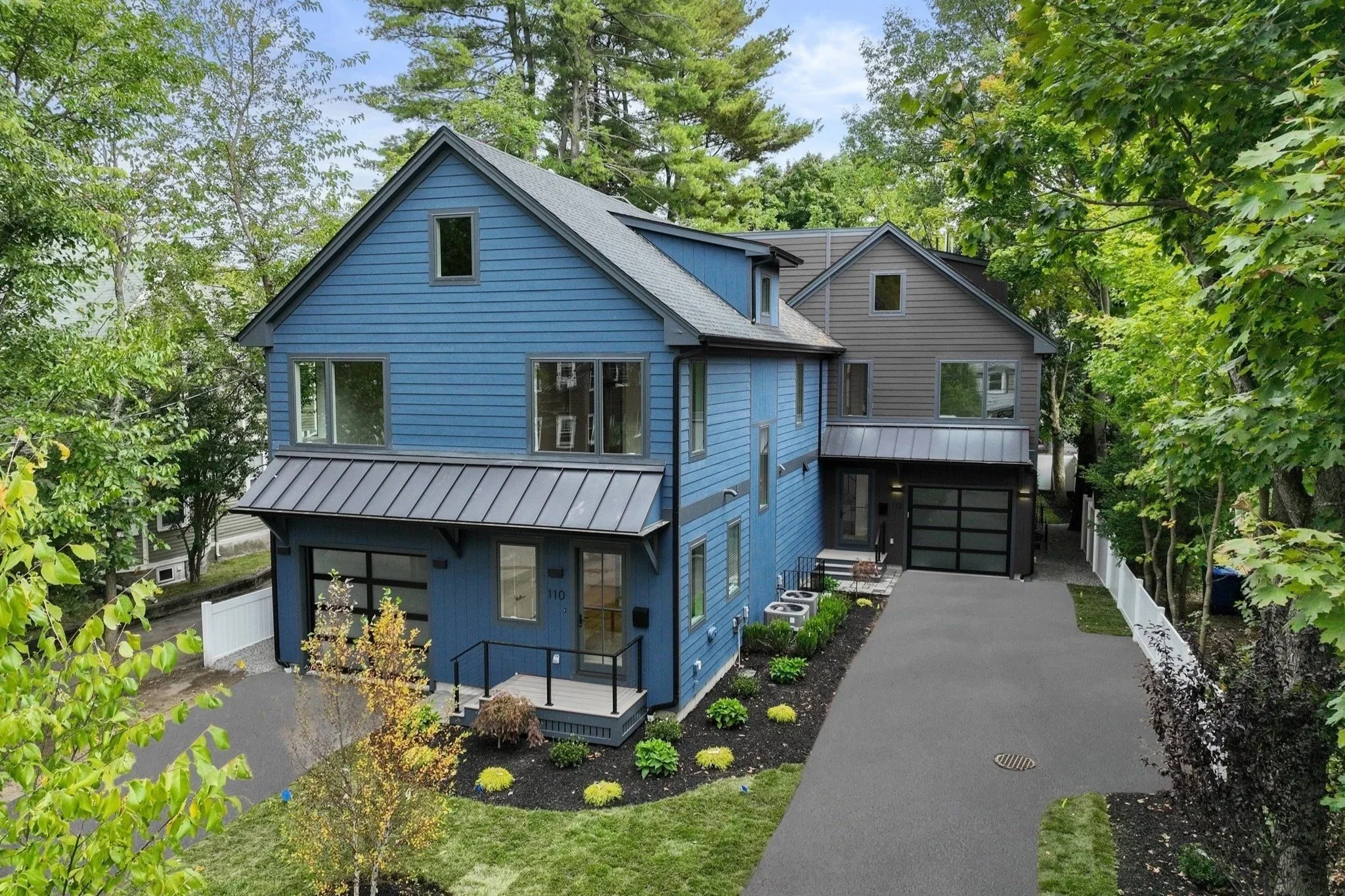
Front and back duplex. Photo credit: Krongle & Paul
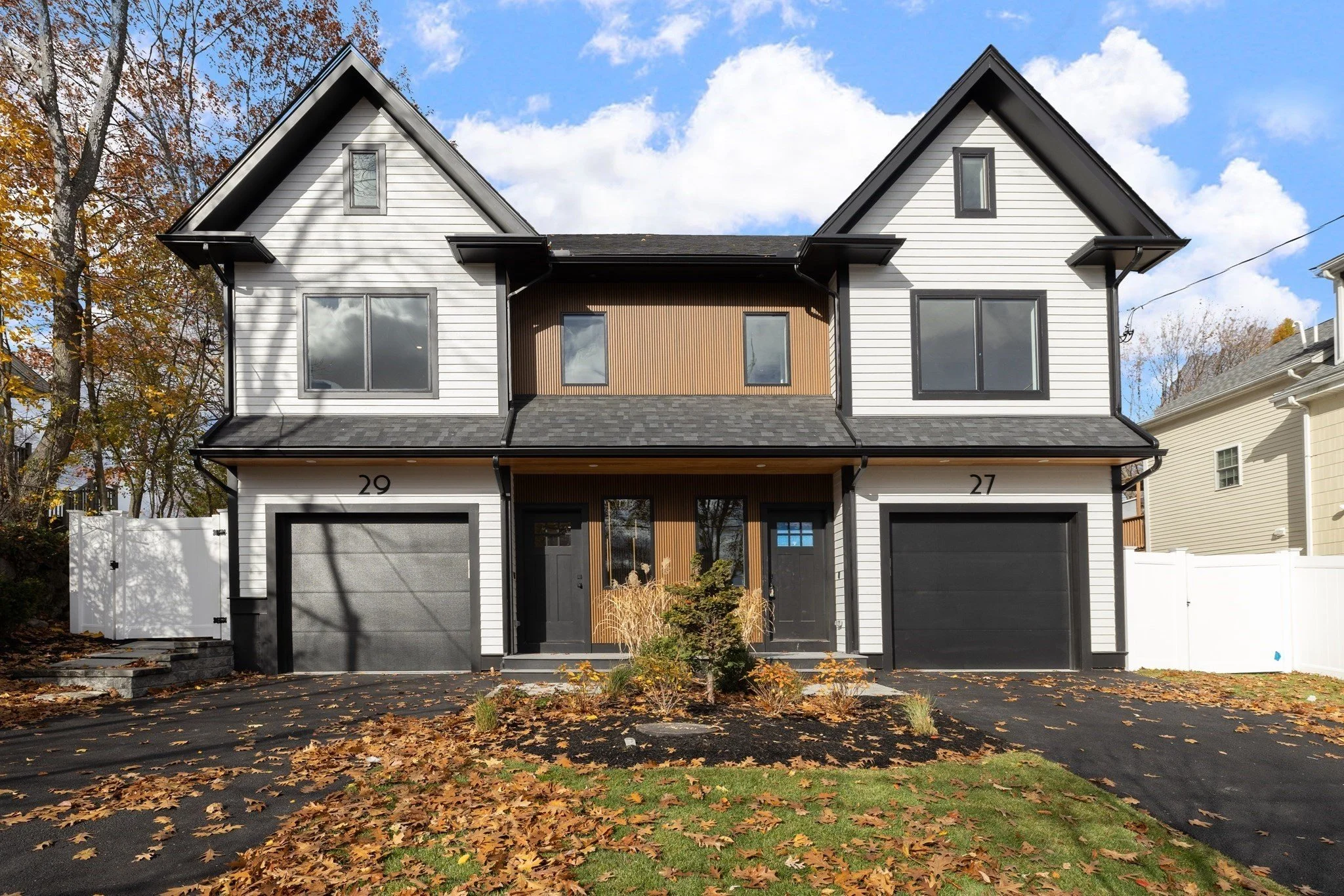
Side-by-side duplex. Photo credit: Rachel Lieberman.
What is an ADU home?
Content credits: Michael A. Robbins, Esq., Crowley & Cummings
An ADU stands for Accessory Dwelling Unit. It is not a separate housing type. It is simply, as the term suggests, a dwelling unit that is accessory to the main structure.
ADUs are part of MA’s push to address housing shortage. As of February 2, 2025, ADUs under 900sqf are allowed "by-right", a law that has removed the need for special permits or zoning variances for ADUs, making it easier for homeowners to build them. Previous restrictions such as requiring owner occupancy or a familiar relationship between ADU occupant and property owner, are no longer allowed.
An ADU falls into one of two categories:
Protected Use ADU: Standard ADUs with minimal town regulations. Protected Use ADUs can be built on lots with a single-family, 2-family or 3-family.
Non-protected ADU: Larger units or those that don’t meet setbacks, septic, or site plan requirements.
Restrictions that apply to ADUs:
ADUs cannot exceed 900 sq. ft. or 50% of the primary dwelling’s size (whichever is smaller).
Lots cannot be subdivided, and ADUs must comply with building codes, egress, setbacks, and height restrictions.
ADUs cannot be used for short-term rentals that are under 30 days.
Properties must meet septic system (Title V) requirements.
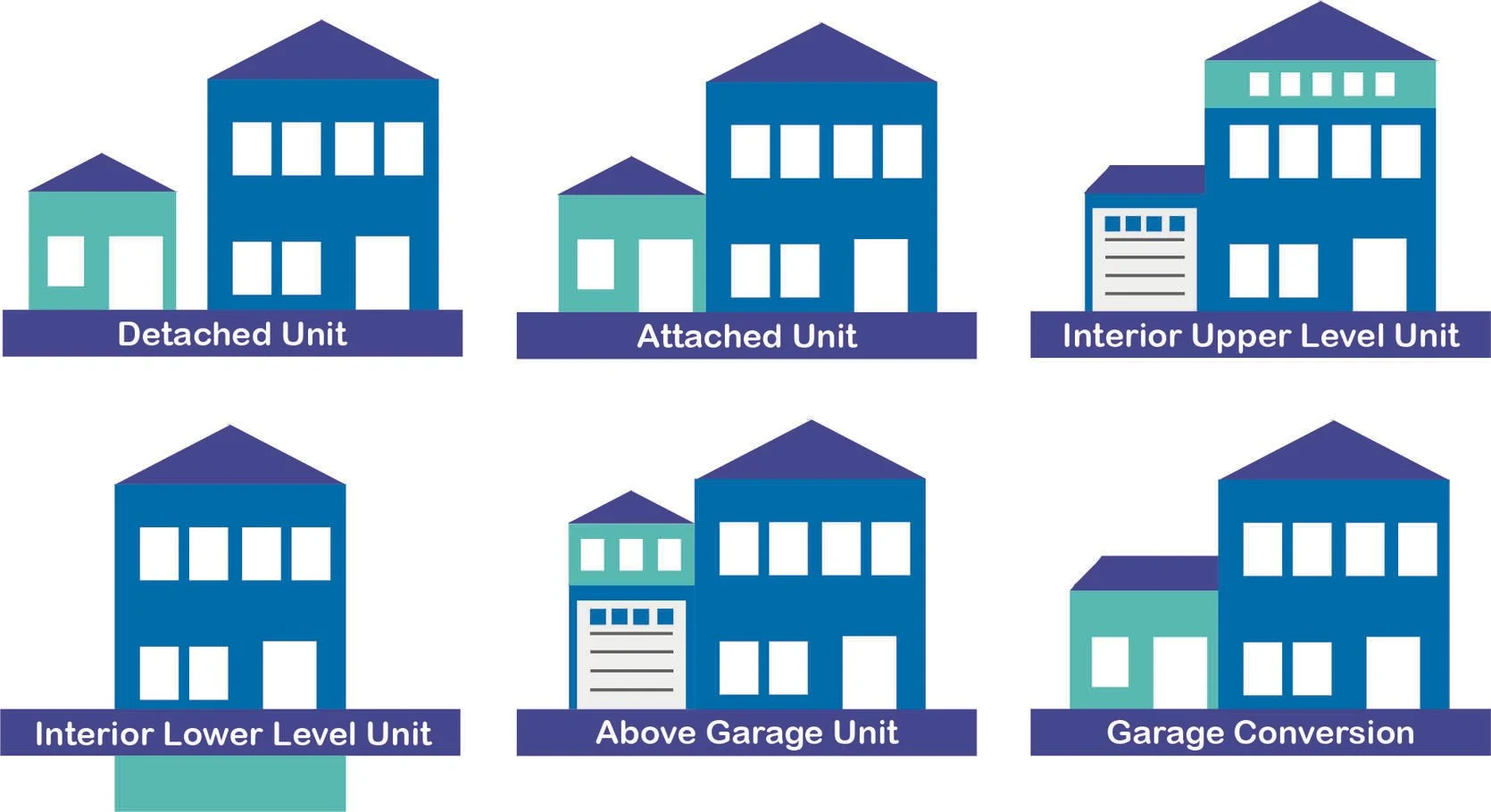
ADUs can be carved out of an existing space, or constructed as a new dwelling on the same plot of land. As such, they may appear as one of the following forms:
Summary
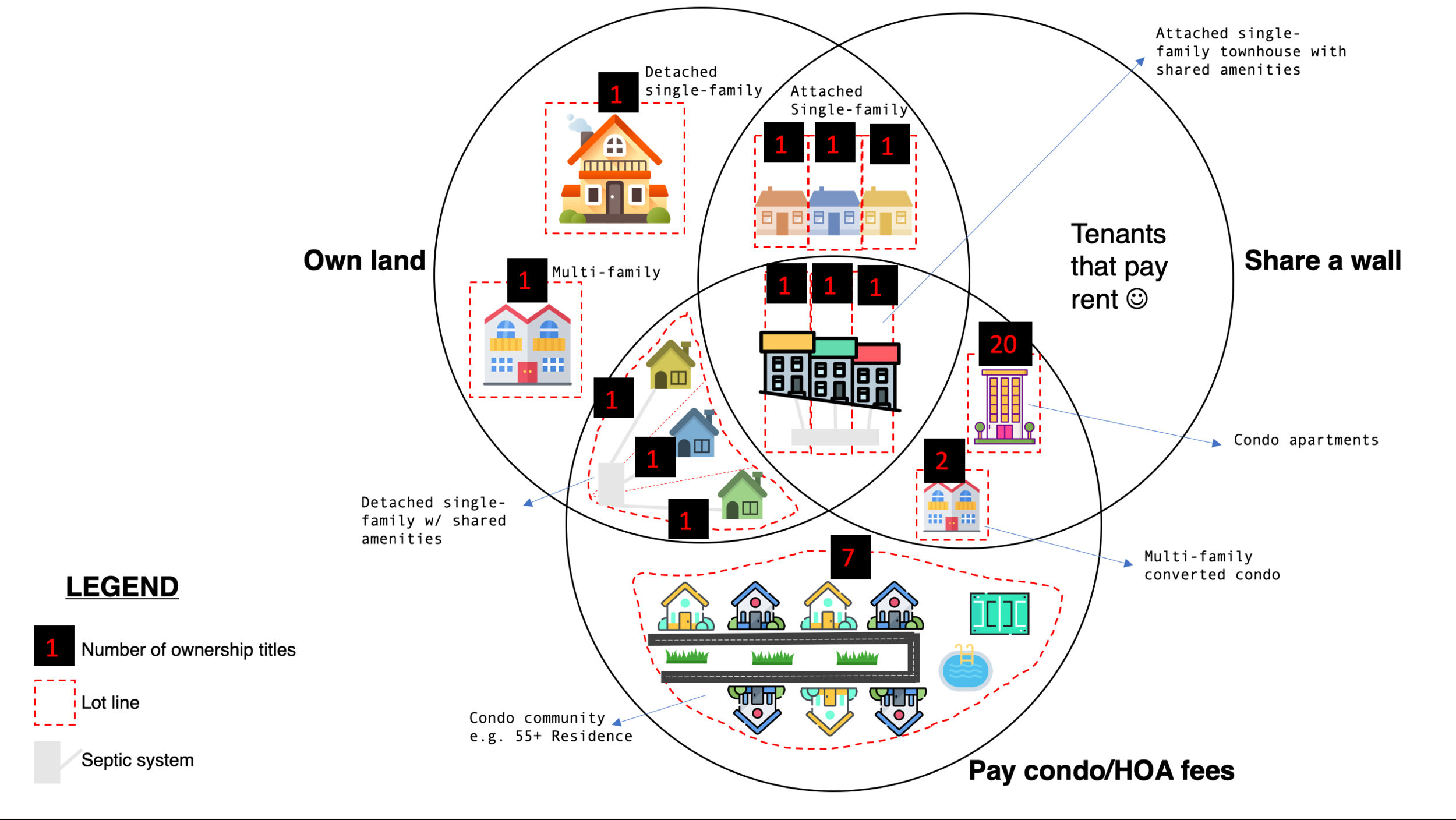
Here’s a venn diagram to illustrate the difference between a single-family home, multi-family home and condo!